Traceability in Metrology: Why It's the Backbone of Quality Control
Charlotte, United States - February 25, 2026 / F D Hurka Metrology /
Charlotte, NC–Manufacturers across the Southeast depend on accurate measurements to maintain product quality, meet customer requirements, and pass regulatory audits. F. D. Hurka Metrology, based in Charlotte, North Carolina, delivers ISO/IEC 17025-accredited calibration services that establish documented connections between measurement results and national standards. Without proper documentation linking measurements to recognized standards, even the most precise instruments cannot provide the verification that quality systems demand.
A single calibration error can lead to out-of-tolerance parts, rework, delayed shipments, and damaged customer relationships. The company has supported automotive, aerospace, and manufacturing operations across nine southeastern states since 1970.

What Metrological Traceability Means for Manufacturing Quality
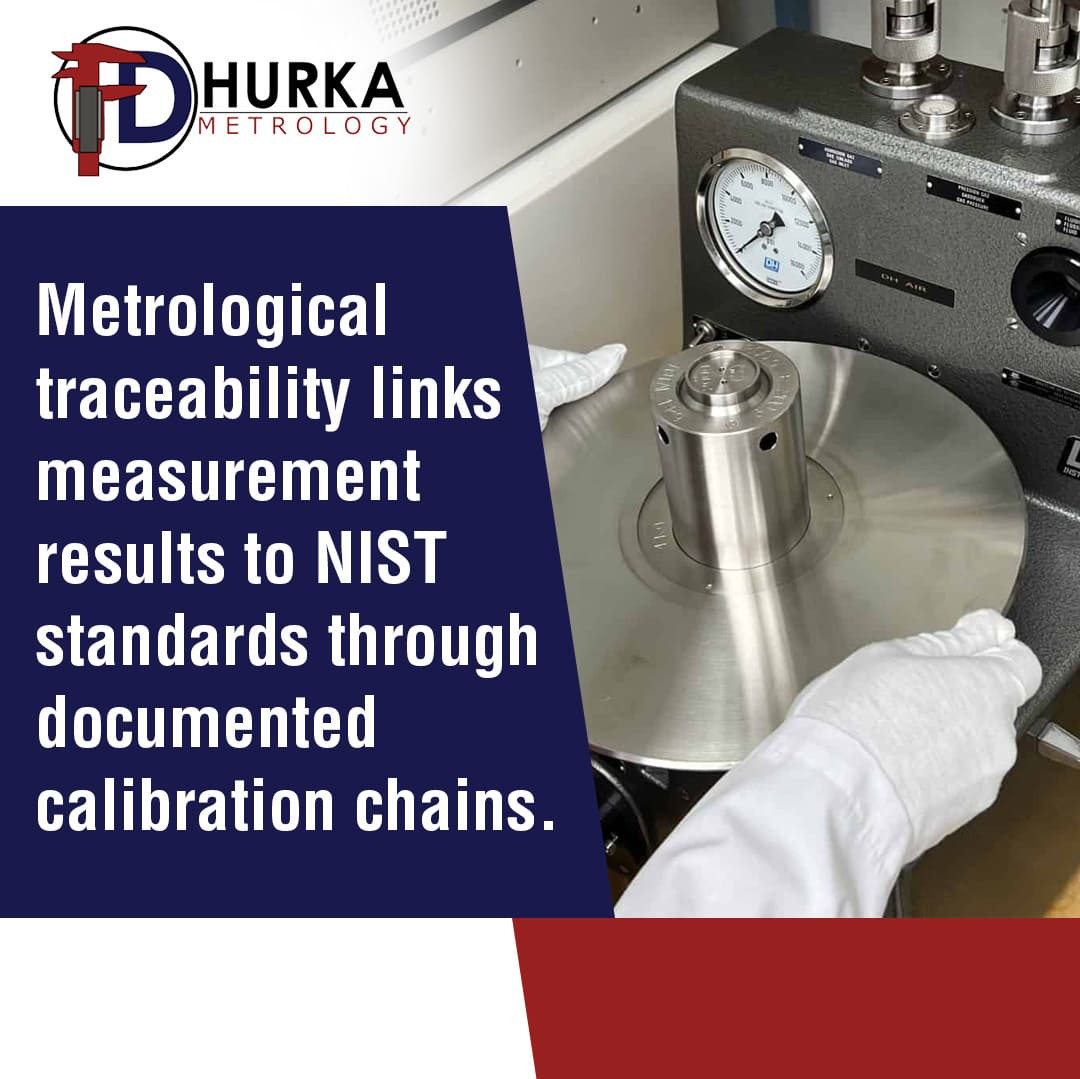
Metrological traceability refers to the documented link between a measurement result and recognized reference standards. This link consists of an unbroken chain of calibrations, with each step including stated measurement uncertainties. The National Institute of Standards and Technology (NIST) serves as the primary reference point for measurement standards in the United States.
Calibration traceability transforms measurement data into verifiable evidence. Auditors, customers, and regulatory bodies require this evidence to confirm that inspection equipment produces accurate results. Industries subject to FDA, FAA, or ISO standards cannot operate without traceable measurements supporting their quality systems.
For dimensional inspection of aerospace components, FAA regulations require documented proof that inspection equipment produces accurate results. Calibration and traceability together provide this proof through certificates that show the complete measurement path back to national standards.
How NIST Traceable Standards Support Quality Systems
NIST traceable standards provide the foundation for measurement reliability across American manufacturing. These standards anchor calibration chains to the International System of Units (SI) maintained by national and international metrology organizations.
F. D. Hurka Metrology maintains reference standards calibrated through laboratories with demonstrated traceability to NIST. The company's metrological calibration services in Charlotte, NC, transfer this traceability to customer measurement equipment, creating the documented path that quality systems require.
Why ISO 17025 Accreditation Matters for Calibration and Traceability
ISO/IEC 17025 accreditation evaluates laboratory competence to perform calibrations. This third-party verification confirms that a calibration provider maintains:
Technical competence of personnel
Valid measurement procedures
Appropriate equipment and environmental controls
Proper uncertainty evaluation methods
Effective quality management systems
F. D. Hurka Metrology holds A2LA accreditation to ISO/IEC 17025 for dimensional, mechanical, and electrical calibration parameters. Calibration certificates from accredited laboratories carry greater credibility during audits and customer reviews than certificates from non-accredited providers.
Customers increasingly require suppliers to demonstrate metrological calibration practices. International trade agreements recognize traceable calibrations from accredited laboratories, opening market opportunities for compliant manufacturers.
The Connection Between Traceability and Measurement Uncertainty
Every calibration in a traceability chain adds measurement uncertainty. The final uncertainty combines all contributions from each link. Working with an ISO 17025-accredited laboratory helps minimize these additions through controlled processes and documented uncertainty budgets.
Calibration traceability alone does not guarantee that measurements meet production requirements. Organizations must compare total measurement uncertainty against part tolerances to confirm fitness for purpose. A commonly cited guideline suggests measurement uncertainty should be less than 10% of the tolerance being evaluated.
F. D. Hurka Metrology includes measurement uncertainty values on all calibration certificates issued from its accredited laboratory. This information supports customer uncertainty budgets and audit documentation requirements.

F. D. Hurka Metrology Calibration Services
F. D. Hurka Metrology has supported precision measurement needs for over five decades. The company serves clients across nine southeastern states: Alabama, Florida, Georgia, Louisiana, Mississippi, North Carolina, South Carolina, Tennessee, and Virginia.
The Charlotte facility offers both in-house and on-site calibration services with 3-5 day standard turnaround times. From routine instrument calibrations to tighter tolerance requirements, the team provides audit-ready documentation that supports metrological traceability claims throughout the calibration chain.
Contact F. D. Hurka Metrology
Organizations seeking calibration and traceability services can click contact to request a quote. The company delivers metrological calibration services and documentation that quality systems demand.

Contact Information:
F D Hurka Metrology
4731 Stockholm Ct
Charlotte, NC 28273
United States
Charles Meredith
https://www.fdhurka.com/

Original Source: https://www.fdhurka.com/calibration/traceability-in-metrology-why-its-the-backbone-of-quality-control/